
Healthier Spaces, Happier Faces
In Kawakawa, a small town in the Far North, the community is finding ways to support its rangatahi despite limited resources.
“As someone who grew up in the community, my family have always been big community people. My mum, my grandparents, they’ve always done things for others. So when I saw this mahi with rangatahi, I thought, how can I help? And I knew this was it, ”said CAYAD coordinator, Tyissa Hape.
Tyissa grew up in a family active in community work, they were familiar with supporting others and saw a need among youth struggling with the effects of alcohol and drug use in families.
“Working with rangatahi in the community is like teaching every day. It’s a step toward my goal of becoming a teacher.”
Kawakawa is a small, largely Māori community, with several primary schools and one secondary school, Bay of Islands College.
Youth-focused activities are central to life in town, from rugby and league teams to boxing and backyard gyms.
“We don’t really have much money or resources in the community, but we’re able to work with what we’ve got. There are so many things going on, people starting gyms in their backyards, running boxing sessions out of their sheds. We’re very resourceful people. We know how to work well with what we have.”
Even with limited funding, the community finds ways to create meaningful opportunities for young people.
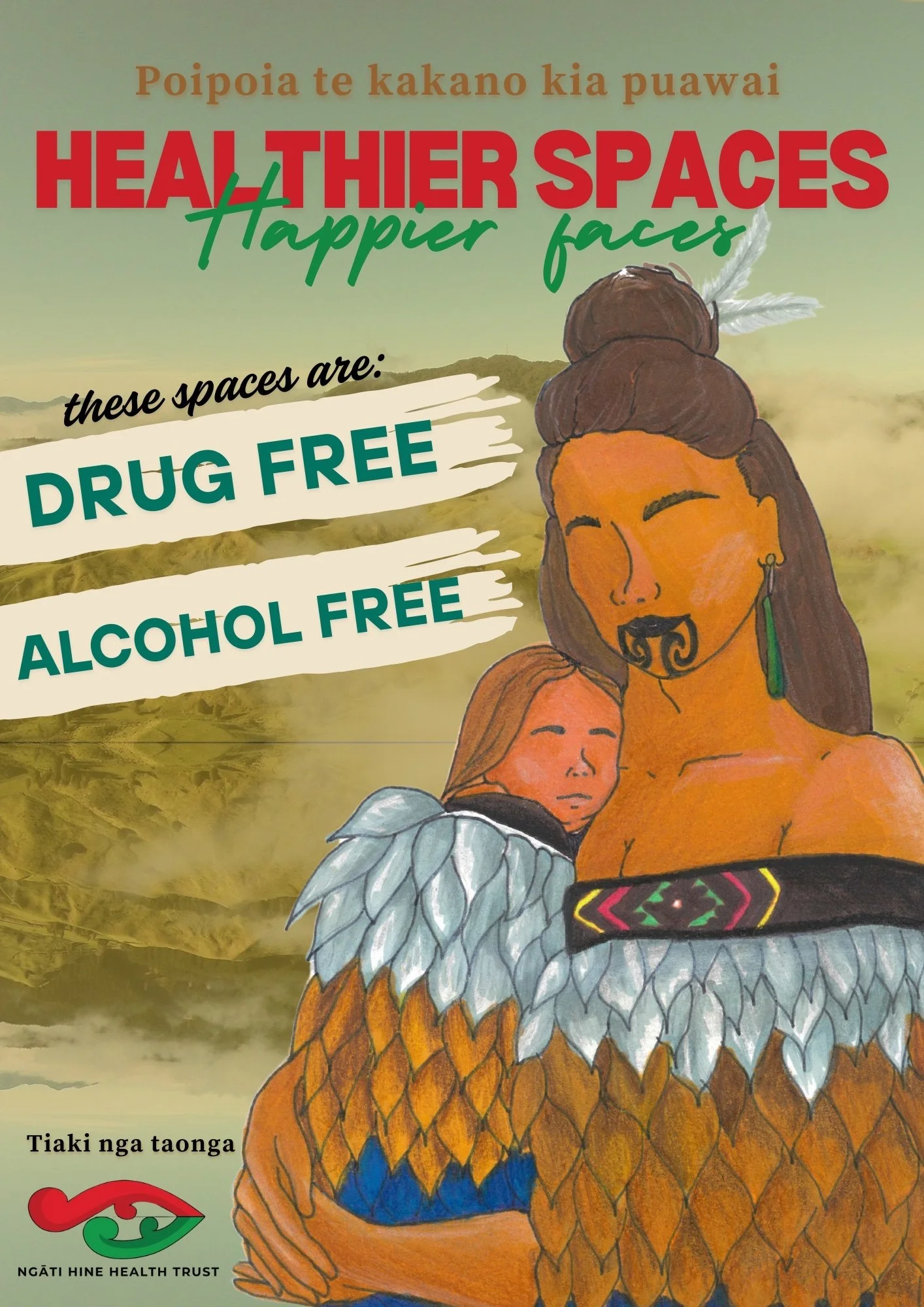
One project making a difference is the “Healthier Spaces, Happier Faces” poster competition.
Designed to encourage alcohol- and drug-free spaces, the project gave rangatahi the chance to create posters that reflect their own ideas of safe and welcoming environments.
“We realised the posters and resources out there didn’t fit our community, they weren’t us. So we thought, why not let our rangatahi design them? The goal was to promote alcohol and drug-free spaces, but it became about giving them ownership and pride in their own message.”
Schools supported the initiative, and students responded with bold, creative designs. The project emphasised learning as well as creativity, with sessions helping students understand the effects of alcohol and drugs in a non-judgmental way.
Community sports clubs have embraced the initiative, displaying posters in clubrooms and around public spaces.
The approach ensures that youth have a voice in shaping their environment, while promoting awareness and safety in places they use regularly.
The project has also highlighted how much rangatahi already know about alcohol and drugs.
“Each student has their own understanding,” Tyissa explained. “Our role is to provide guidance and support, not lecture. It’s about building knowledge and confidence.”
Through projects like “Healthier Spaces, Happier Faces,” Kawakawa is showing that even small communities can make a real difference.
What makes Kawakawa’s approach unique is its focus on process as much as outcome.
“It’s about giving rangatahi ownership. They know what matters to them and their peers, and they can express it creatively. That’s where real change starts.”
From backyard boxing rings to rugby fields, Kawakawa’s youth are shaping spaces that reflect their values, energy, and aspirations.
Through projects like “Healthier Spaces, Happier Faces,” the town is proving that in this corner of Aotearoa, rangatahi are showing that they are not just the leaders of tomorrow, they are the changemakers of today.